
Best cable ties for PC cable management
Best cable ties for PC cable management help organize internal wiring, improve airflow and maintain a clean professional looking PC build.
Why cable management matters in PC builds
Effective cable management is a key factor in building a reliable and visually clean PC. Choosing the best cable ties for PC setups helps maintain order inside the case and supports long term performance.
Impact of organized cables on airflow and cooling
Loose or tangled cables can block airflow paths inside a PC case. When airflow is restricted heat builds up around critical components such as the CPU GPU and power supply. Properly secured cables improve air circulation which helps cooling fans and heatsinks work more efficiently. This leads to lower operating temperatures and more stable system performance.
Importance of clean layouts for maintenance and upgrades
A clean cable layout makes future maintenance easier. When cables are neatly tied, upgrades such as adding storage, replacing a GPU or cleaning dust can be done faster and with less risk of disconnecting the wrong cable. Good cable management also reduces stress on connectors during repeated adjustments.
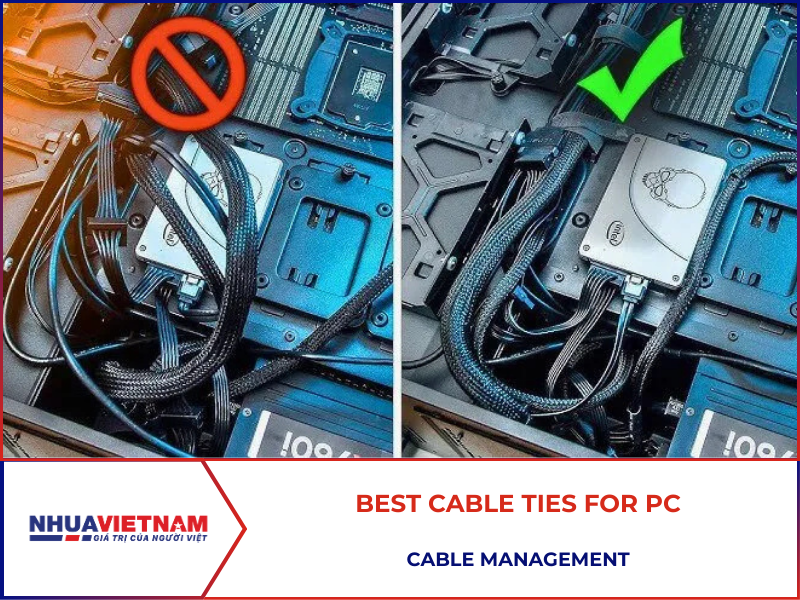
What makes the best cable ties for PC cable management
Not all cable ties are suitable for PC interiors. The best cable ties for PC builds are designed to work in tight spaces while protecting sensitive cables.
Size flexibility for tight PC case spaces
PC cases often have limited clearance especially behind the motherboard tray. Short and narrow cable ties allow precise bundling without excess material. Flexible sizing helps route cables cleanly through small cutouts and narrow channels.
Smooth edges to protect cable insulation
Sharp edges on low quality ties can damage cable insulation over time. Smooth edge cable ties reduce the risk of cuts or pressure marks especially on soft sleeved power cables and thin data wires.
Common types of cable ties used in PC cable management
Different PC builds require different fastening approaches depending on how often cables need to be adjusted.
Standard plastic zip ties for permanent routing
Standard plastic zip ties are often used for areas where cables are unlikely to change such as front panel wiring or fixed fan cables. Once tightened they provide secure and compact fastening that keeps cables in place long term.
Reusable cable ties for frequent adjustments
Reusable cable ties or hook and loop straps are ideal for power supply cables and modular connections. They allow easy removal and re-tightening during upgrades without cutting the tie which makes them practical for enthusiasts and frequent builders.
Where to use cable ties inside a PC case
Strategic placement of cable ties improves both airflow and appearance.
Power supply cables and motherboard wiring
Power cables from the PSU are often the thickest and most difficult to manage. Using the best cable ties for PC power cables helps bundle excess length and keep wires aligned along designated routing paths.
Routing cables behind the motherboard tray
The area behind the motherboard tray is ideal for hiding cables. Cable ties secure wiring to anchor points and prevent cables from pressing against the side panel which helps close the case cleanly and avoid bulging.
Tips for selecting the best cable ties for PC builds
Choosing the right cable ties improves both functionality and aesthetics.
Matching tie size to cable thickness and bundle size
Small signal cables require narrow ties while thicker power bundles need wider ones. Using the correct size prevents over tightening and keeps cables protected while maintaining a tidy look.
Balancing aesthetics ease of use and durability
For visible areas inside glass panel cases color and finish matter. For hidden areas durability and ease of adjustment may be more important. Selecting cable ties that balance appearance and practicality helps achieve a clean and reliable PC build.


