
UV resistant zip ties for outdoor cable management
UV resistant zip ties provide durable fastening solutions for outdoor cable management where prolonged sunlight exposure affects material performance.
Outdoor cable management challenges under UV exposure
Outdoor cable management systems face continuous exposure to environmental conditions that directly affect fastening reliability. Sunlight weather changes and temperature variation all contribute to material degradation if unsuitable cable ties are used.
Long term sunlight impact on plastic fastening materials
Prolonged exposure to sunlight causes standard plastic materials to degrade over time. UV radiation breaks down polymer chains leading to discoloration, loss of flexibility and eventual cracking. In outdoor cable management this degradation reduces the ability of cable ties to maintain holding force which increases the risk of cable movement or failure.
Temperature fluctuations and weather related stress
Outdoor environments experience daily and seasonal temperature shifts along with rain humidity and wind. These conditions cause cables and fasteners to expand and contract repeatedly. This cyclic stress can loosen non UV resistant ties accelerating wear and compromising system stability.
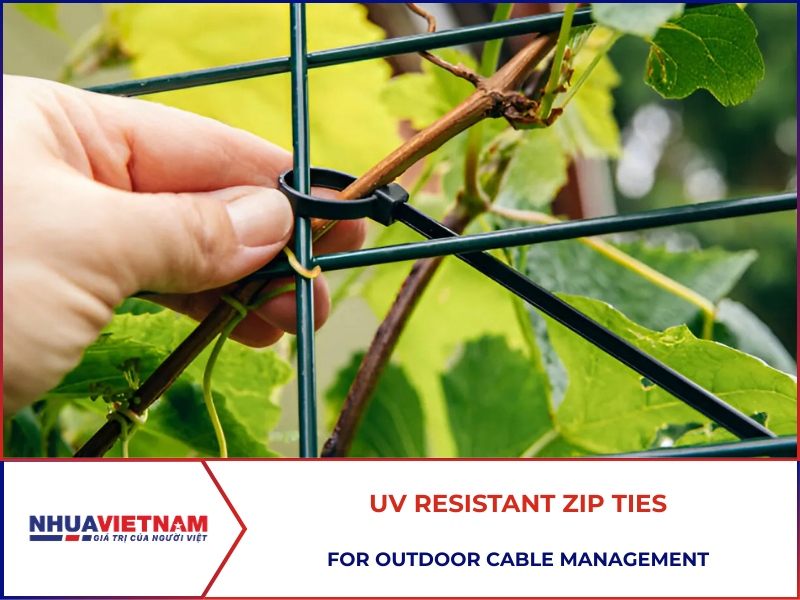
Why uv resistant zip ties are suitable for outdoor cable management
UV resistant zip ties are specifically engineered to withstand prolonged exposure to sunlight and harsh outdoor conditions.
UV stabilized materials preventing brittleness and cracking
UV resistant zip ties are manufactured with stabilizing additives that protect the plastic from UV damage. These additives slow down polymer degradation allowing the material to retain flexibility and strength over extended periods. As a result the ties remain resistant to brittleness and cracking even under continuous sun exposure.
Consistent holding strength in exposed environments
By maintaining material integrity UV resistant zip ties provide consistent holding strength throughout their service life. This ensures cables remain securely fastened despite ongoing environmental stress reducing the likelihood of loosening or failure.
Common applications of uv resistant zip ties outdoors
Thanks to their durability, UV resistant zip ties are widely used across a range of outdoor cable management applications.
Securing cables on rooftops poles and exterior walls
These zip ties are commonly used to fasten cables along rooftops, utility poles fences and building exteriors. Their resistance to UV and weather makes them suitable for installations where direct sunlight exposure is unavoidable.
Organizing outdoor power and communication cables
Outdoor power lines communication cables and data wiring require organized routing to prevent sagging and damage. UV resistant zip ties help maintain clean cable layouts while ensuring long term stability in exposed environments.
Advantages of uv resistant zip ties over standard zip ties
Choosing UV resistant options offers clear advantages compared to standard cable ties when used outdoors.
Longer service life in direct sunlight
UV resistant zip ties last significantly longer under direct sunlight than standard ties. This extended lifespan reduces the risk of premature failure and improves overall system reliability.
Reduced maintenance and replacement frequency
With improved durability fewer inspections and replacements are needed. This lowers maintenance costs especially in hard to reach outdoor locations and supports more efficient long term cable management.
Selection considerations for uv resistant zip ties
Proper selection ensures that UV resistant zip ties perform effectively in outdoor cable management applications.
Choosing appropriate length and tensile rating
The tie length and tensile strength must match the cable bundle size and expected load. Selecting ties with adequate capacity ensures secure fastening without overstressing the material.
Verifying UV resistance standards and material quality
Not all black or outdoor rated ties offer the same level of UV protection. It is important to verify UV resistance specifications and material quality to ensure long term performance in sunlight exposed environments.


